Introduction
Have you ever noticed those small decorative panels on the walls of studios, offices and cinemas?
They are acoustic panels. Though they look simple, these small materials play a vital role in noise reduction and interior decoration. However, many manufacturers struggle with reliable, high-quality cutting for custom shapes. In this blog, we will introduce acoustic panels, their common processing challenges, and the efficient digital cutting solution for your production.
What are acoustic panels and where are they used?
Ever wondered how cinemas and studios get clean sound without annoying echoes? The unsung hero is the acoustic panel. More than just wall decor, panels made of polyester fiber, grooved wood or fabric-wrapped materials absorb extra sound waves and reduce reverberation.
Acoustic panels serve spaces demanding good acoustic performance. They are widely used in recording studios, cinemas, KTVs, offices and schools, and also popular for home theater renovations. They optimize indoor sound quality while beautifying wall surfaces.
Main Common Acoustic Panel Materials
Polyester fiber panels are lightweight, eco-friendly and widely used. Grooved wood panels offer natural wood texture for premium decoration. Fabric-wrapped panels provide customizable colors and reliable sound absorption. Foam panels are cost-effective for basic noise reduction.
These materials vary in hardness, so they need tailored cutting methods to prevent burrs, cracks and material waste.
Widely Used Scenarios for Acoustic Panels
Acoustic panels are popular in commercial spaces like offices, recording studios, cinemas and KTVs, where clear sound and low echo are essential. They are also installed in schools and libraries to reduce ambient noise.
They are increasingly chosen for residential projects such as home theaters. Whether for commercial renovation or home decoration, these panels create comfortable acoustic environments while beautifying interior walls.
What challenges exist in acoustic panel cutting?
Acoustic panels are porous and lightweight, prone to fraying, deformation and shifting during cutting. Their soft, porous texture makes it hard to get clean, sharp edges, and uneven material density often causes inconsistent cutting depth.
Thick acoustic panels also bring extra trouble. Ordinary cutting tools may crush the panel surface, and manual nesting wastes lots of material. It is tricky to maintain stable material positioning when processing large-size acoustic boards.
Traditional Cutting Defects (Burrs, Deformation)
Traditional cutting methods tend to leave rough burrs on acoustic panel edges. The porous soft structure is easily squeezed and deformed under mechanical pressure, resulting in uneven outlines.
Inconsistent cutting force also causes dimensional errors. Heat from laser cutting may scorch the board surface and damage the acoustic performance.
Low Efficiency of Manual & Die Cutting
But manual cutting heavily relies on workers’ experience, bringing slow speed and high dimensional error rates. Die cutting requires customized dies, which costs a long lead time for new patterns.
Both methods are not fit for frequent design changes. Batch production will consume massive labor and raise overall production costs.
Difficulty in Custom Shapes Processing
Traditional cutting solutions struggle to handle complex custom contours of acoustic panels. Manual and die cutting lack flexibility when designs are updated frequently.
It takes extra time to adjust tools for irregular shapes. Small-batch custom orders often come with high production costs and long lead times.
What is the best cutting solution for acoustic panels?
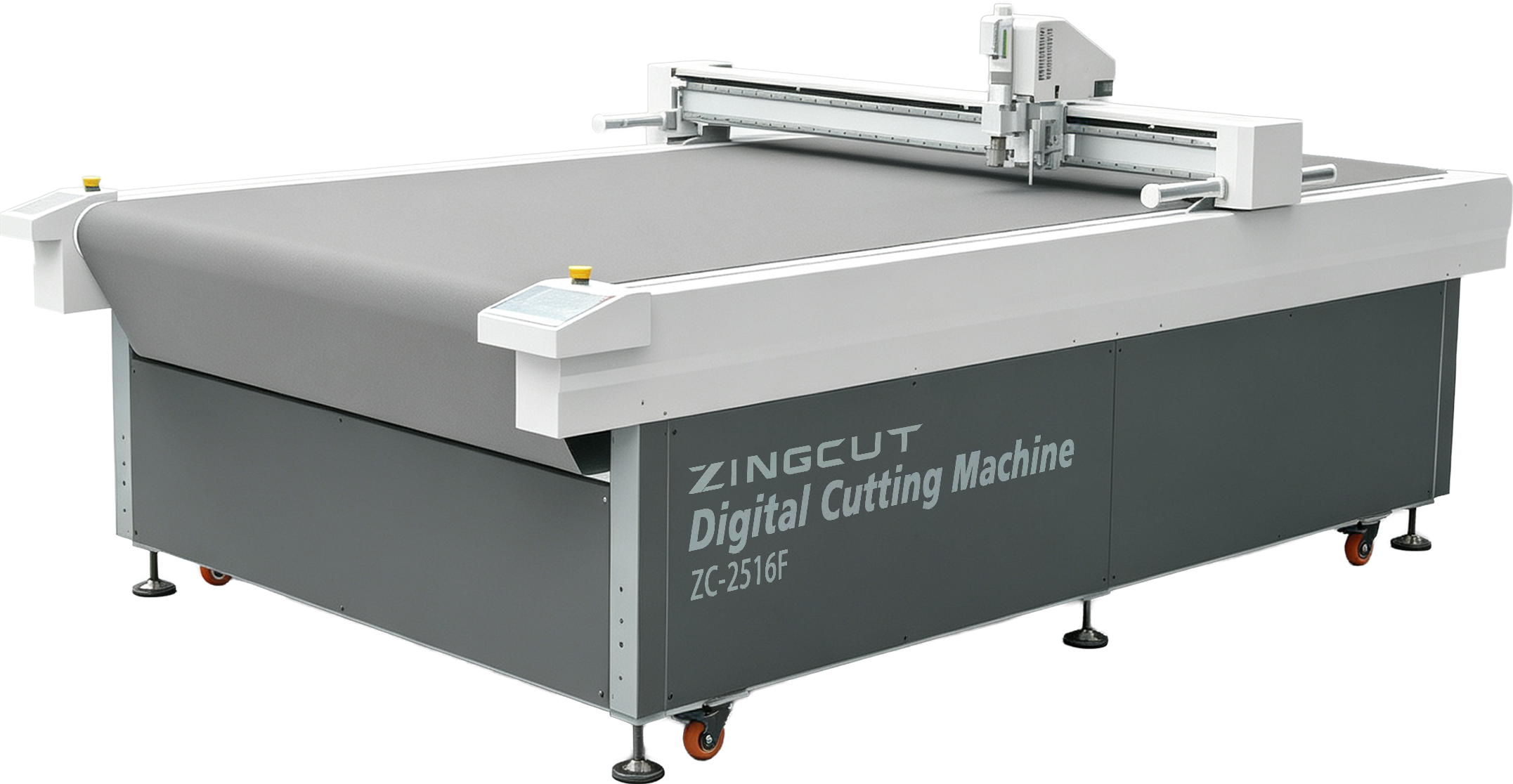
The digital vibrating knife cutting machine stands out as the ideal solution for acoustic panel processing. It uses mechanical oscillating cutting instead of heat, which avoids material scorching and preserves the acoustic performance of porous panels. It delivers clean, burr-free edges without squeezing or deforming the soft board.
Our cutter supports flexible custom shapes and fast design changes. It handles small-batch prototypes and mass production equally well, greatly cutting down labor costs and material waste. Paired with automatic feeding system, it enables continuous batch cutting for higher productivity.
Core Advantages for Acoustic Panel Cutting
The digital oscillating cutter delivers precise mechanical cutting without heat generation. It produces neat, burr-free edges and prevents deformation of porous acoustic panels, maintaining their original sound-absorbing properties.
It supports flexible custom shapes and quick design modifications. Combined with the automatic feeding system, it realizes continuous batch cutting, reduces material waste and manual work, and suits both prototype sampling and mass production.
Supported Cutting & Grooving Processes
The digital cutting machine performs full contour cutting, half-cutting, V-grooving and U-grooving for acoustic panels. It accurately cuts out circles, hexagons and other custom irregular shapes without crushing the porous panel structure.
Precise V-groove and U-groove machining helps bend acoustic panels into assembled structures. All processes can be finished in one setup, eliminating repeated workpiece handling and improving processing consistency.
Production Benefits for Manufacturers
This digital cutting system slashes setup time and eliminates custom die costs. Manufacturers can quickly switch between different designs, which is perfect for frequent prototype updates and small-batch custom orders.
It reduces material waste and manual labor. With automatic feeding, continuous batch operation is achievable, bringing stable output, shorter lead times and lower overall production costs.