Introduction
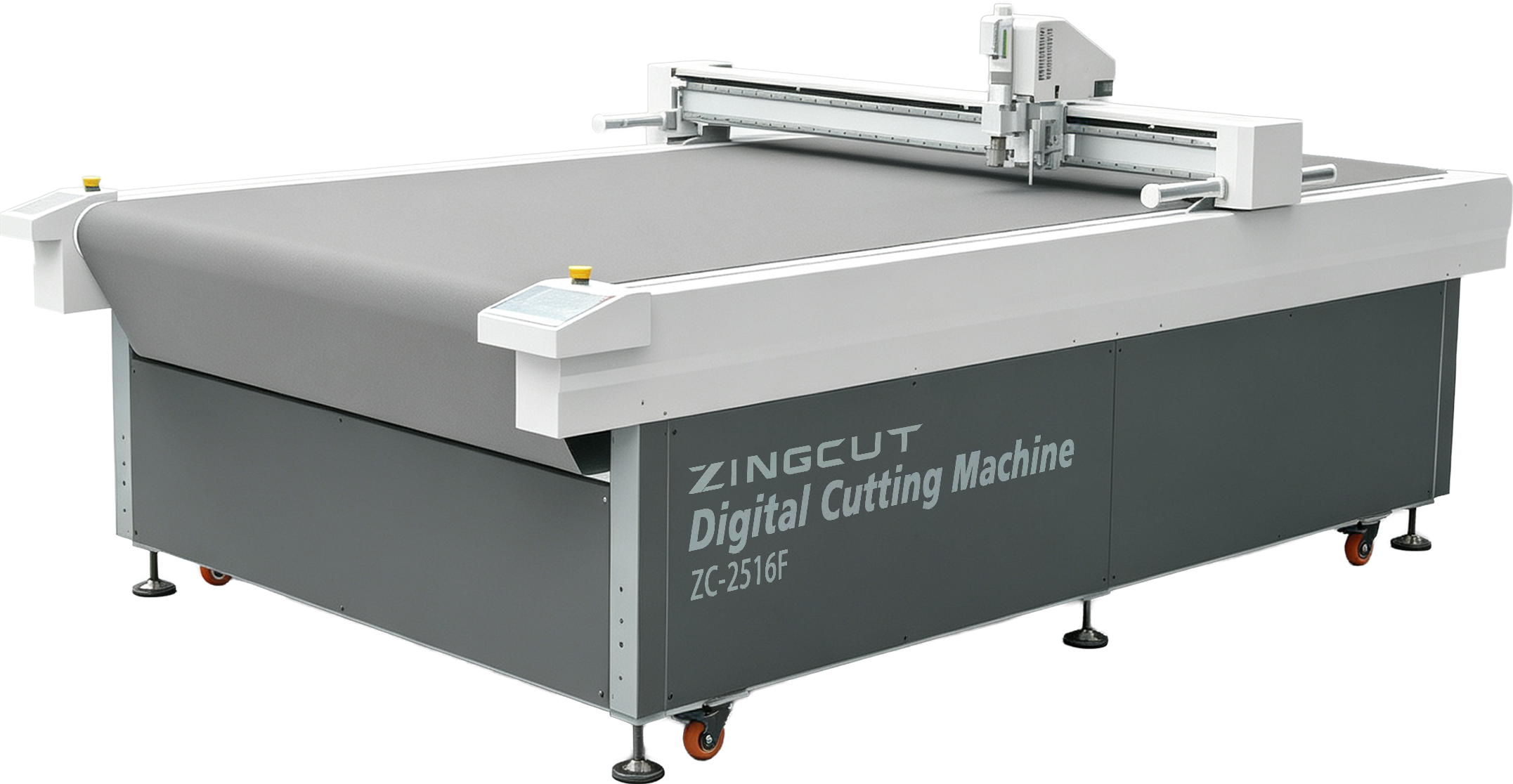
Purchasing a CNC flexible material cutter is a critical investment for manufacturers in apparel, packaging, automotive interior, acoustics, and soft material processing industries. A suitable digital cutting machine directly determines production efficiency, finished product quality, and long-term operational costs. To help business owners and procurement managers avoid wrong purchases and select a cost-effective flexible cutting solution, we have summarized 7 core purchasing factors for reference.
1.Material Compatibility & Cutting Adaptability
Different flexible materials have unique physical properties, including thickness, softness, ductility, and surface texture, which require targeted cutting technology. A high-quality CNC flexible cutter must support a wide range of flexible materials, including fabric, leather, sponge, foam, vinyl, cardboard, fiberglass, and composite soft materials.
Before purchasing, you need to confirm whether the machine’s cutting tools (oscillating knife, drag knife, creasing wheel) can adapt to all materials in your production list. Machines with poor material compatibility will cause incomplete cutting, material tearing, or edge burrs, leading to massive material waste and defective products. Good material adaptability ensures one machine meets multi-scene production needs and improves equipment utilization.
2.Cutting Precision & Stability
Precision is the core standard to measure the performance of flexible material cutting machines. For high-precision industries such as automotive interior parts, garment pattern cutting, and acoustic panel processing, even millimeter-level errors will lead to unqualified finished products and customer complaints.
Professional CNC flexible cutters adopt advanced servo drive systems and high-precision linear guide rails, ensuring long-term cutting accuracy within ±0.1mm. In addition to static precision, you must focus on long-running stability. Many low-cost machines suffer from accuracy deviation and position offset after long-hour continuous work. Stable cutting precision guarantees consistent finished product quality and reduces secondary rework rates.
3.Production Speed & Work Efficiency
Production efficiency directly affects corporate output and order delivery capacity, which is especially important for factories with bulk order demands. The cutting speed of a CNC flexible cutter depends on its operating system, motor performance, and motion control algorithm.
High-performance digital cutting machines support high-speed cutting, fast tool switching, and automatic nesting functions. Intelligent nesting software can automatically arrange cutting layouts, maximize material utilization, and greatly save manual typesetting time. When selecting equipment, you should balance speed and precision: avoid choosing machines that pursue speed at the cost of cutting quality, and select equipment that achieves dual improvement of efficiency and yield.
4.Automatic Feeding & Intelligent Function Configuration
Modern flexible material processing is gradually replacing manual operation with full automation to solve the problems of low manual efficiency and large error. Intelligent functional configuration is an indispensable purchasing factor for modern CNC cutting machines.
It is necessary to confirm whether the equipment is equipped with core intelligent functions: automatic roll material feeding, dual-layer feeding, material lifting and unloading, vacuum adsorption fixing, and CCD visual positioning cutting. The vacuum adsorption system can firmly fix soft and easy-to-shift materials to avoid cutting deviation; CCD visual positioning supports cutting printed patterns and contour materials. Automated configurations greatly reduce manual intervention, save labor costs, and adapt to mass continuous production.
5.Equipment Durability & Build Quality
A CNC cutting machine is long-term production equipment, and its frame structure and accessory quality determine the service life and failure rate. Low-priced inferior machines use thin welded frames and inferior accessories, which are prone to vibration and deformation during long-term operation, seriously affecting cutting accuracy.
Reliable flexible cutting machines adopt thick industrial integral cast iron or steel frame structures, with anti-vibration and anti-deformation design. Meanwhile, core accessories such as motors, guide rails, and control systems use brand industrial accessories, ensuring stable operation for many years. Excellent build quality reduces equipment failure frequency, lowers maintenance costs, and creates stable long-term production benefits for enterprises.
6.Software Compatibility & Operation Simplicity
Many traditional cutting machines have complicated closed systems, which are difficult to operate and incompatible with mainstream design software, bringing great troubles to designers and operators.
Excellent CNC flexible material cutters support mainstream design formats such as AI, DXF, PLT, and PDF, compatible with common design software like Illustrator and AutoCAD. The independent intelligent operating system features a visualized simple interface, no complicated programming required, and ordinary workers can master the operation quickly after simple training. In addition, the system supports personalized parameter adjustment, data storage, and batch production, which greatly improves production flexibility.
7.After-sales Service & Technical Support
Complete after-sales service is the guarantee of long-term stable operation of equipment, and it is also the most easily ignored factor in procurement. Industrial CNC equipment will inevitably encounter operational failures, tool wear, and parameter debugging problems during long-term use.
Reliable suppliers provide one-stop services including machine installation, professional operation training, remote technical guidance, and global after-sales support. Timely after-sales maintenance can avoid production shutdown losses caused by equipment failure. In addition, professional suppliers provide long-term accessory supply and machine upgrade services, ensuring that the equipment can adapt to updated production demands in the future.
Conclusion
Selecting a suitable CNC flexible material cutter is not only about comparing prices, but also comprehensively evaluating material adaptability, precision, efficiency, configuration, quality, software system, and after-sales service. Only by combining your own production materials, order scale and long-term development goals can you pick the most cost-effective flexible cutting equipment to boost production efficiency and market competitiveness.